
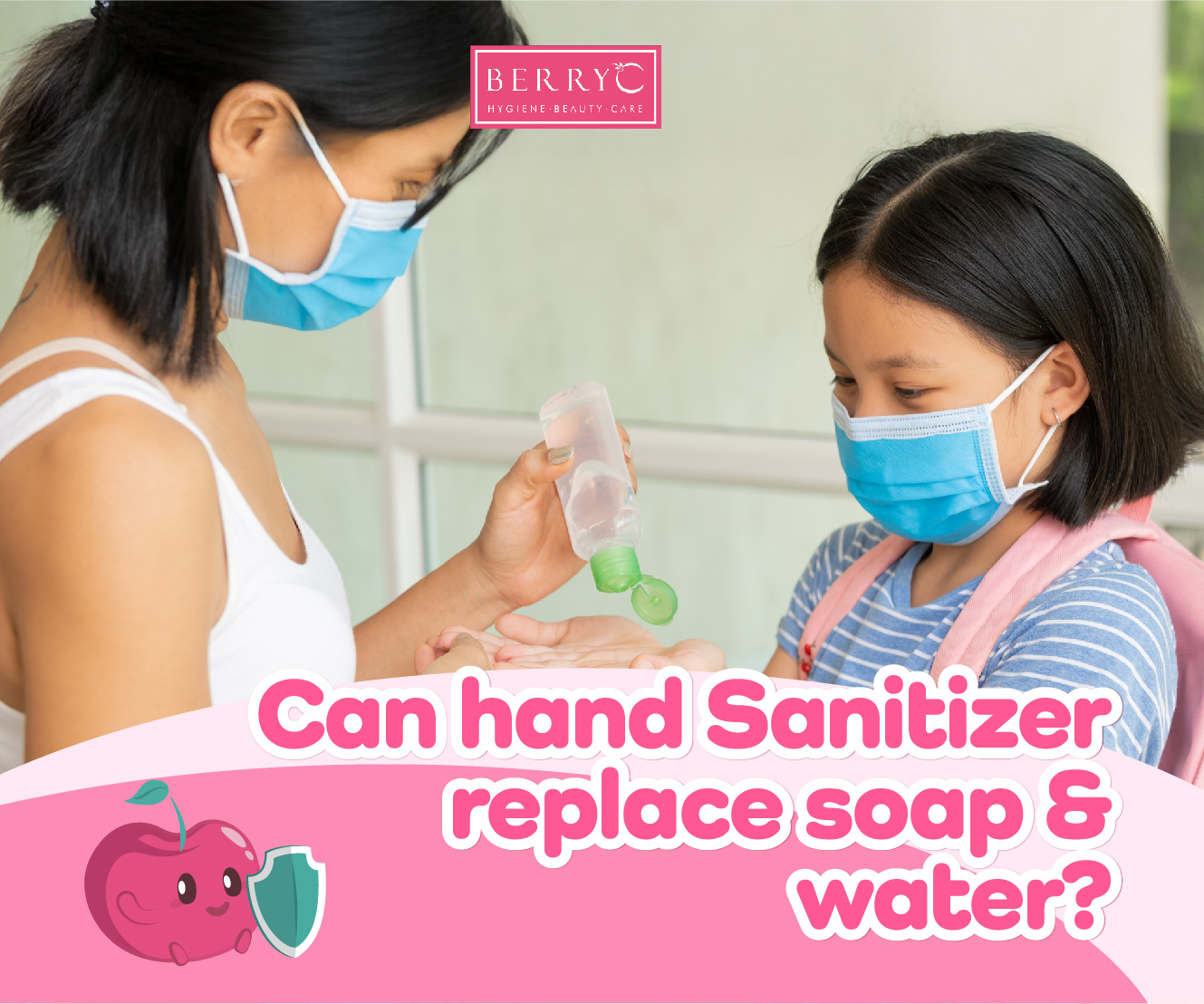
When it comes to clean hands, the big question keeps popping up: can hand sanitizer replace soap and water? Short answer: no. Soap-and-water handwashing remains the gold standard because it physically removes dirt, oils, and microbes that sanitizers can’t always handle—especially when hands are visibly dirty or greasy. Below is a practical, skimmable guide you can share with family (and kids!) so everyone knows when to wash, when to sanitize, and why both have a place.
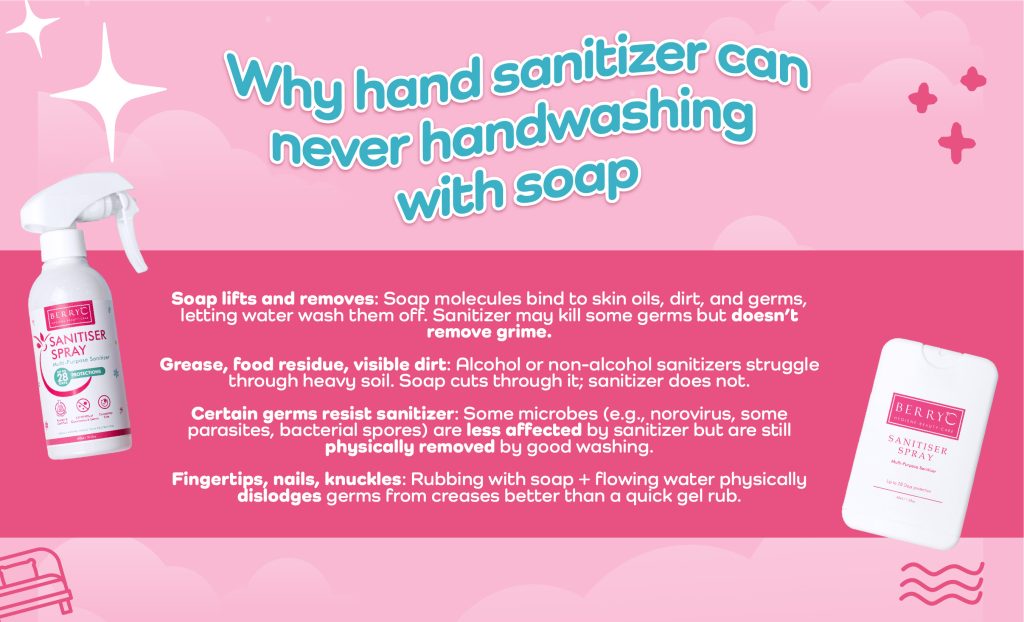
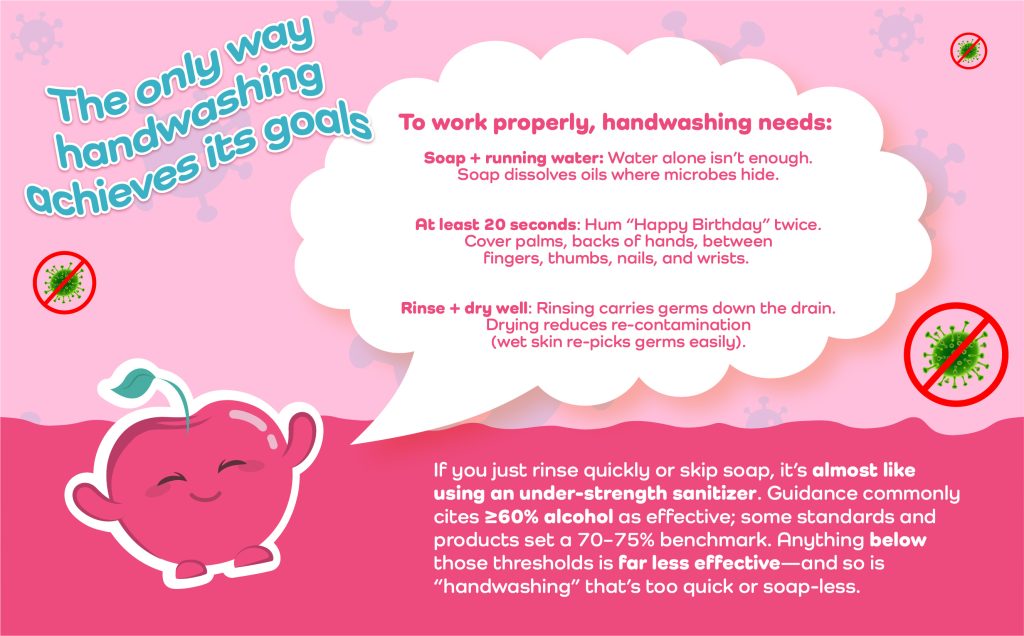
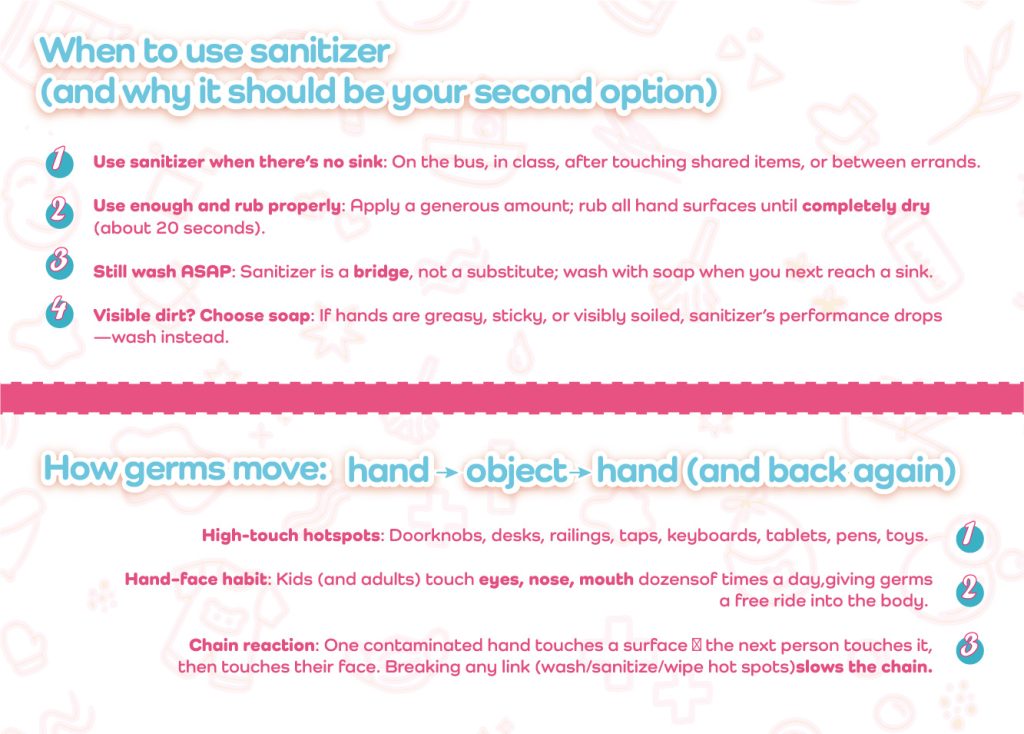
Practical “when to wash” cheat-sheet (family-friendly)
- Always with soap & water: after toilet; before eating/prepping food; after handling trash/cleaning; after outdoor play; when hands look/feel dirty.
- Sanitize if no sink: before snacks on-the-go; after sharing stationery/electronics; after public transport; after coughing/sneezing (then wash when possible).
Handwashing with kids: make it stick (fun, quick wins)
- Set cues: “Before eat, after toilet, after sneeze, after share.”
- Make 20 seconds fun: Use a short song, timer, or sticker chart.
- Model the behavior: Kids copy adults—wash together.
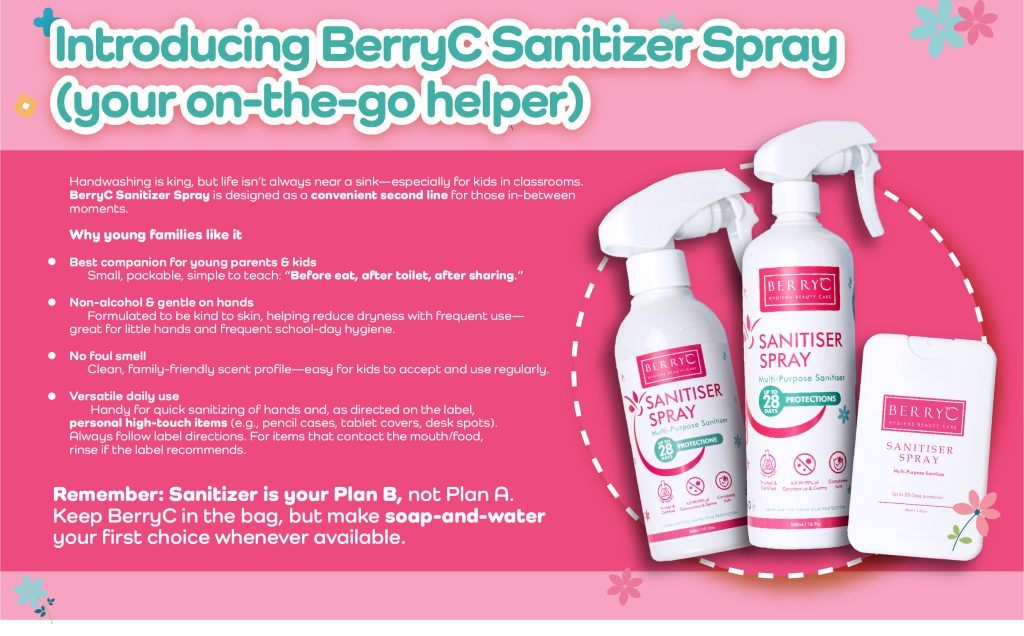
- School routine: Put a pocket sanitizer in the pencil case or side pocket; remind them to use it when they can’t reach a sink.
FAQs (fast facts)
- Can sanitizer fully replace soap? No. It’s helpful, but not a substitute—especially when hands are dirty.
- Which is faster? Sanitizer is quicker on the go, but wash with soap at the next opportunity.
Conclusion
Hand sanitizer is a smart backup, not a replacement. The cornerstone of hand hygiene—at home, in class, and on the go—remains soap and water for at least 20 seconds. That’s how you physically remove the grime and germs that sanitizer can’t always reach. Between sinks, keep a family-friendly option like BerryC Sanitizer Spray handy so kids can clean up during those critical moments (before eating, after toilet, after sharing). Teach the routine, keep it simple, and you’ll dramatically cut the hand-to-face germ highway—one clean pair of hands at a time.