

When a child spikes a temperature, parents often ask: “Is this just a normal fever—or is it influenza?” While both can start with raised body temperature, influenza (flu) is a specific viral infection that typically hits harder, faster, and comes with a pattern of symptoms you can spot.
This guide breaks down the key differences, when to seek treatment (the “golden window”), why early care matters for kids, possible complications if you wait, how infections spread in classrooms, and simple prevention steps—including how BerryC Sanitizer Spray can help.
Five key differences: “normal” fever vs. influenza fever

Onset & intensity
- Normal fever: may build gradually; often linked to mild colds, teething (in infants), or minor infections.
- Influenza fever: tends to start suddenly, with higher temperatures (≥38–39 °C), and makes kids feel “hit by a truck.”
Body aches & fatigue
- Normal fever: mild tiredness or body discomfort.
- Influenza fever: prominent muscle/body aches, chills, and profound fatigue—kids look and feel clearly unwell.


Respiratory signs
- Normal fever: runny nose or mild cough can appear, but not always intense.
- Influenza fever: cough (often dry), sore throat, and headache are common and more marked; runny/stuffy nose can add on.
Speed of spread in groups
- Normal fever: if caused by routine colds, spread may be slower/less dramatic.
- Influenza fever: spreads easily and rapidly in classrooms/childcare—multiple classmates can fall ill within days.


Duration & recovery
- Normal fever: often resolves within 1–3 days with supportive care.
- Influenza fever: fever and systemic symptoms typically last 3–5 days, with cough/fatigue that can linger a week or more.
Helpful rule of thumb: Sudden high fever + marked aches + cough/sore throat + your child looks “really knocked out” = think influenza.
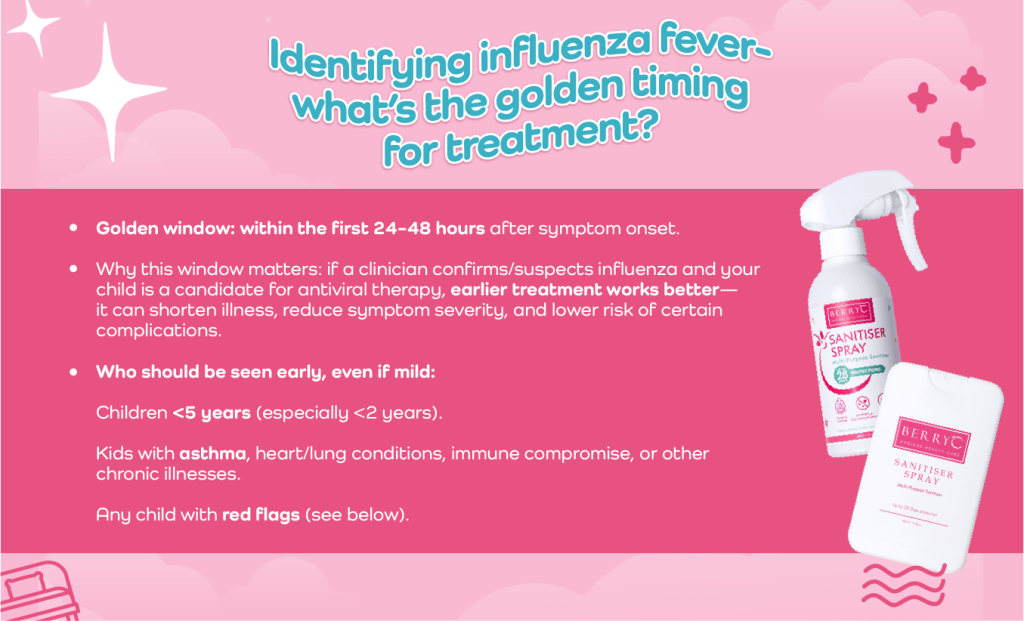
Why early treatment matters for kids
- Reduces viral load earlier: helps the body win the “race” against the virus, especially in smaller airways of young children.
- Shortens duration & intensity of symptoms: less time with high fevers, aches, and miserable days off school.
- Lowers complication risk: the sooner the virus is controlled, the less likely it triggers lower respiratory infections or systemic complications.
- Prevents spread: kids become less contagious sooner, helping protect siblings, grandparents, and classmates.
- Protects high-risk groups: infants and kids with underlying conditions benefit most from early assessment and, if indicated, antiviral therapy.
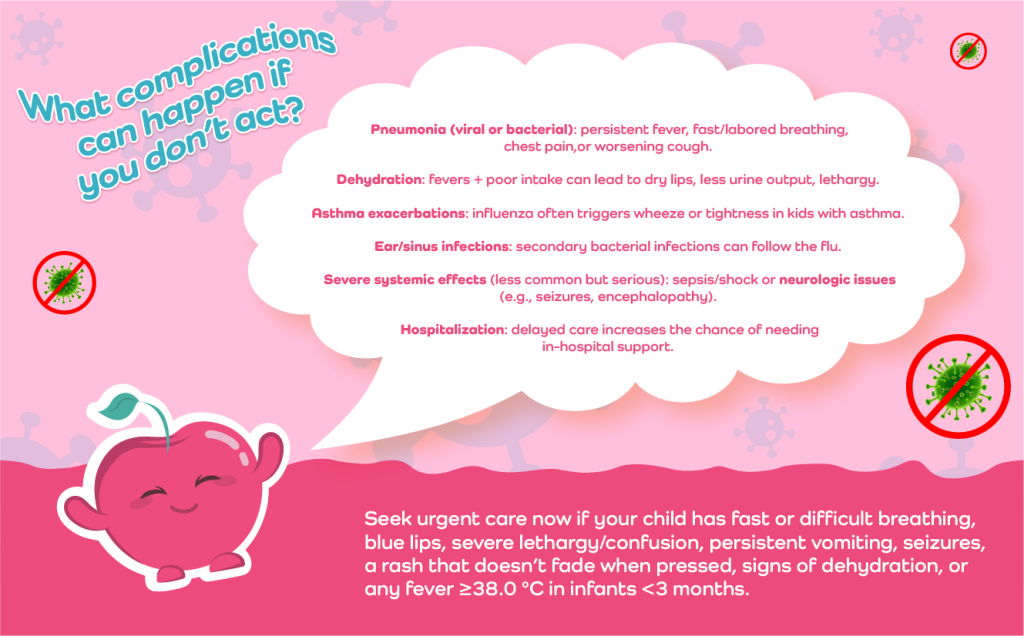
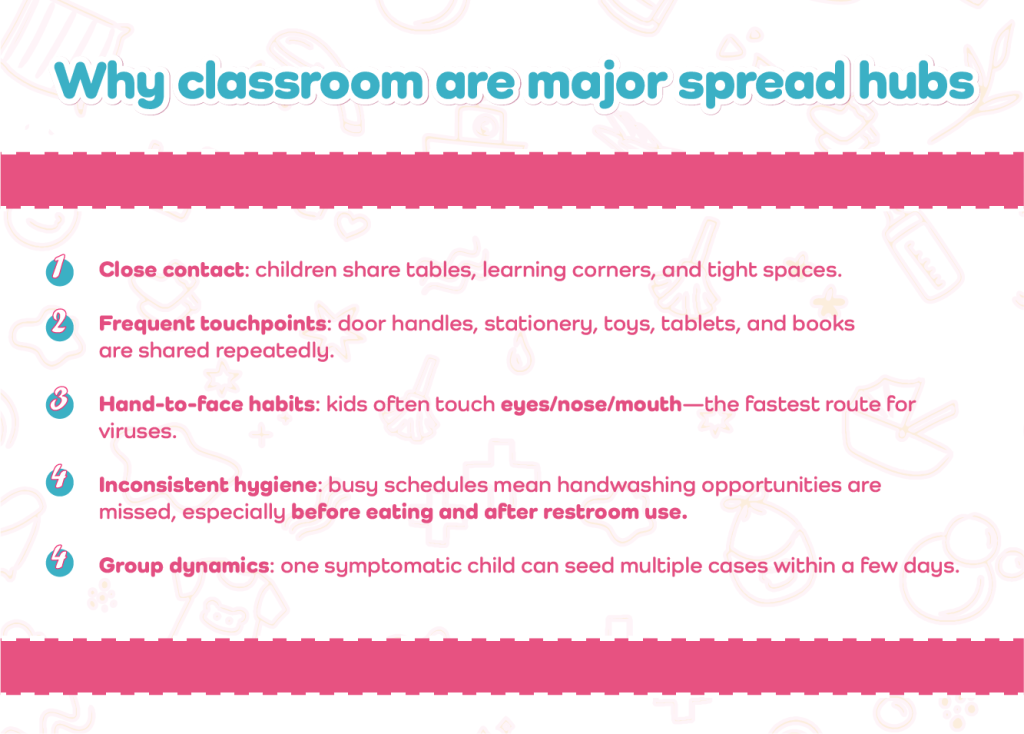
Simple prevention steps that work
- Hand hygiene is king:
- Wash with soap & water for ~20 seconds—before meals, after toilet, after coughing/sneezing, after sharing items.
- Use sanitizer when sinks aren’t available—rub until dry, covering palms, backs of hands, between fingers, fingertips.
- Masks during outbreaks: a properly sized mask helps limit droplet spread in crowded indoor spaces.
- Vaccination: annual influenza vaccine reduces severity, hospitalization, and school absenteeism.
- Teach cough etiquette: cough/sneeze into a tissue or elbow; dispose tissue and clean hands right away.
- Avoid school when unwell: rest at home to recover—and reduce spread.
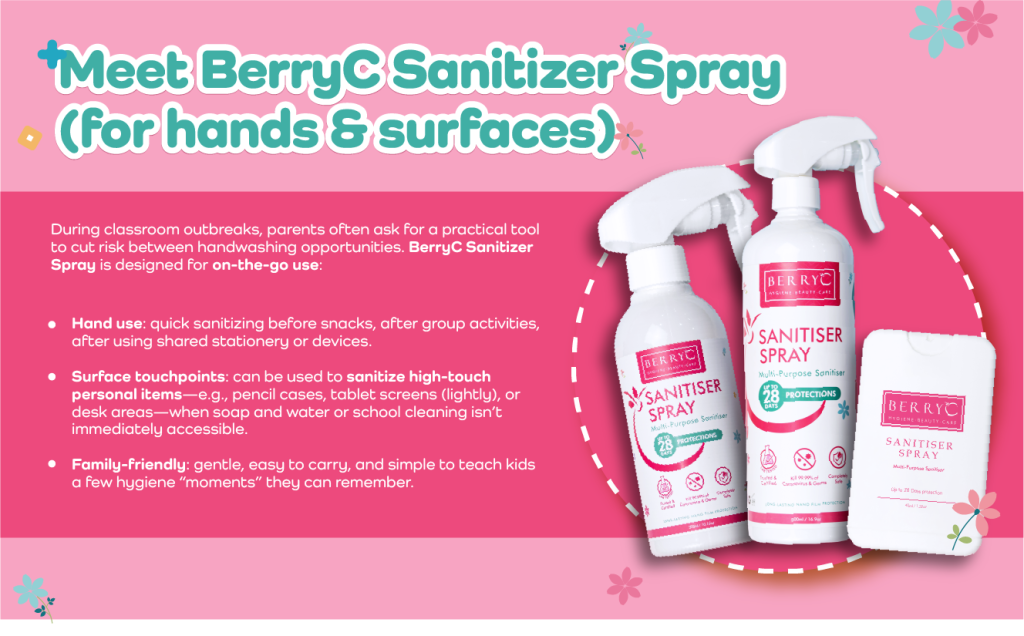
Parents: teach, supply, and normalize good habits
- Pack a small bottle in your child’s bag (and one spare at home).
- Set the habit moments: before eating, after toilet, after sharing items, after coughing/sneezing.
- Make it routine: short checklists on the bag or desk can help.
- Model the behavior: kids mirror adults—sanitize and wash together.
Conclusion
“Normal” fevers can be part of many mild illnesses, but influenza fever has a tell-tale pattern: sudden onset, higher temperature, stronger aches, and marked fatigue—often spreading rapidly in classrooms. The golden window for kids is within 24–48 hours of symptoms for medical assessment and, if appropriate, antiviral treatment. Early action shortens illness and reduces complications.
Prevention is practical: hand hygiene, properly sized masks during outbreaks, vaccination, and staying home when ill. As a daily helper, keep BerryC Sanitizer Spray on hand for those in-between moments—so parents and kids can work together to cut down the risk of infection and keep the classroom healthier for everyone.