TB (tuberculosis) is not a new disease, but it is getting attention again in Malaysia — and parents should understand the basics. The good news is: TB can be treated, and it can also be prevented with the right steps. The problem is many people only think of TB as an “old disease,” so they miss early signs and delay getting checked. This article breaks it down in simple terms so parents know what to watch for, what to do, and what not to panic about.
1) What is TB, and is it really happening in Malaysia again in 2026?
- TB (tuberculosis) is an infection caused by bacteria. It usually affects the lungs, but it can also affect other parts of the body.
- TB spreads through the air — mainly when a person with active TB in the lungs coughs, sneezes, talks, or spits.
- This means TB is not just a “dirty surface” issue. It is mainly an airborne infection, especially in places with close contact and poor ventilation.
- Yes, TB is actively being reported in Malaysia in 2026. Bernama reported 2,571 TB cases in Malaysia up to Epidemiological Week 5 (Jan 1 to Feb 7, 2026), which was an increase compared with the same period in 2025.
- Bernama also reported 10 new TB clusters across 7 states, with Johor recording the highest number of cases in one cluster.
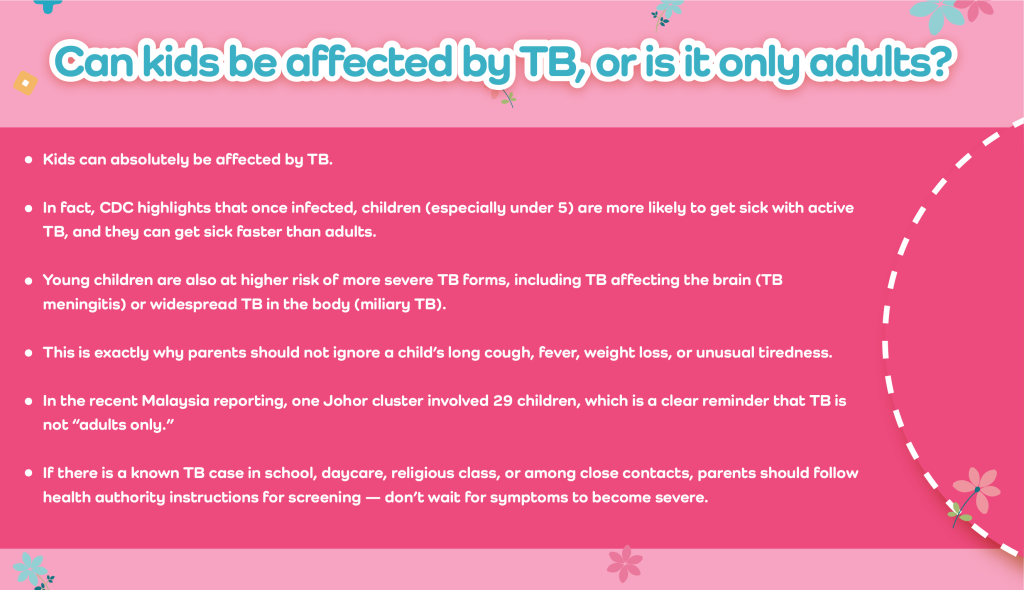
- One important point for parents: in the Johor cluster, the reported cases included children (not just adults). So this is not something only adults need to care about.
3) Most Malaysians got BCG as babies. Can adults take BCG again? Should they?
- In Malaysia, babies receive free vaccines under the National Immunisation Programme, which starts from birth, and BCG is part of the early immunisation schedule.
- So yes, many Malaysians already received BCG when they were very young.
- For adults, BCG is not something you simply “repeat” as a booster. WHO’s BCG position summary states that revaccination is not recommended (even if a skin test or IGRA result is negative).
- In simple terms: if you are worried about TB as an adult, the main focus is usually screening and medical assessment, not taking BCG again by default.
- Another useful point: if you had BCG before, it can affect the TB skin test and cause a false positive. CDC says TB blood tests (IGRA) are preferred for people who have received BCG because BCG does not affect the blood test result.
- Bottom line for parents: don’t self-decide on repeat BCG. If there is exposure risk (school, household contact, workplace), ask a doctor or TB clinic about testing, not just vaccination.
4) How long is TB treatment?
- TB treatment is not a few days. It usually takes months.
- WHO explains that standard TB treatment is commonly a 6-month course of antibiotics, and treatment must be completed properly.
- Some treatment plans may be shorter or longer depending on the type of TB and the patient’s condition (for example, drug-sensitive vs drug-resistant TB, or latent TB vs active TB).
- For latent TB (TB germs in the body but no symptoms), there are preventive treatment options, and some are shorter regimens.
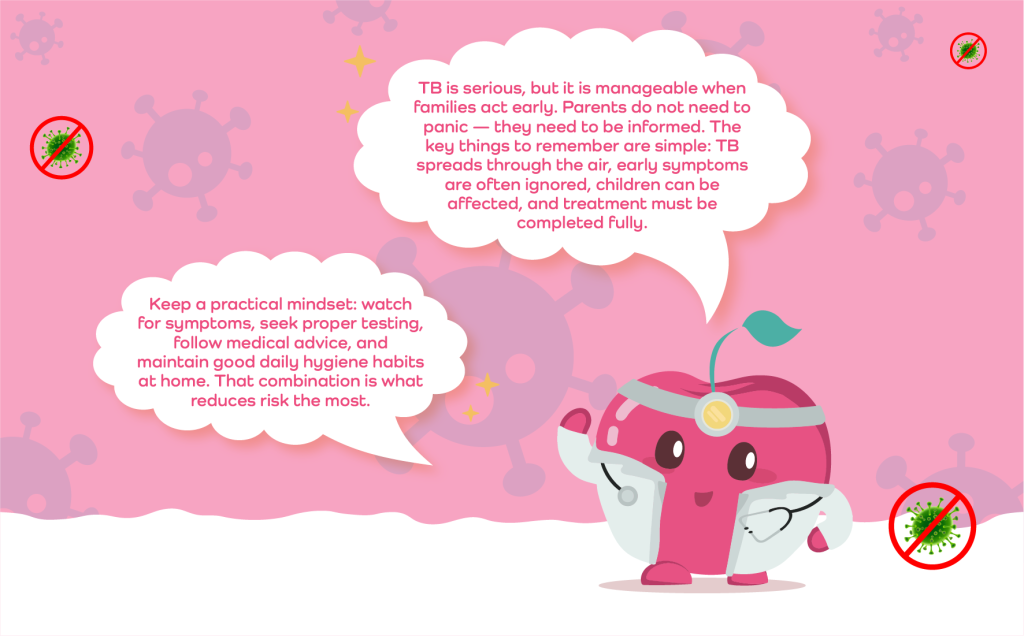
- The most important thing: do not stop treatment early just because symptoms improve. Stopping halfway can cause the bacteria to become harder to treat (drug-resistant TB).
- This is why doctors and clinics monitor TB treatment closely. Compliance is a big deal.
5) How can parents reduce the risk of TB?
- First, be clear about this: TB is mainly spread through the air, so prevention is not only about wiping surfaces.
- Practical prevention steps for families:
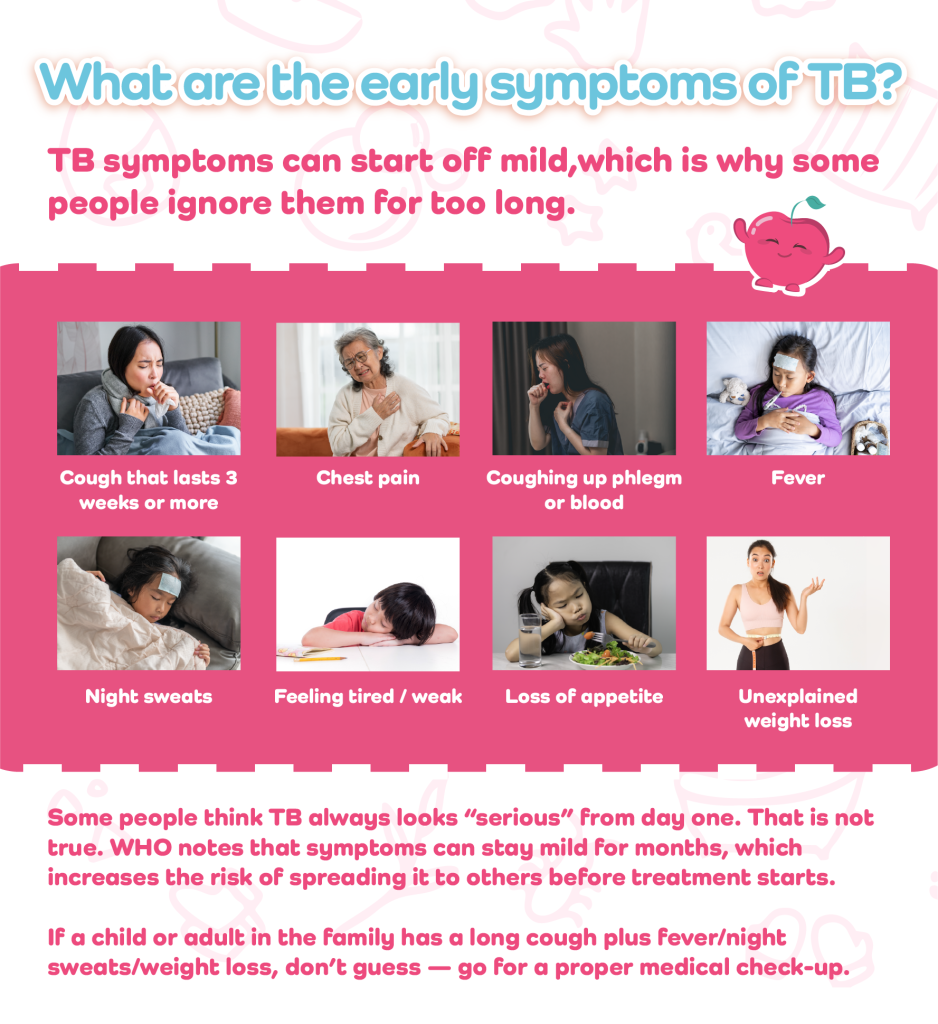
- Get prolonged coughs checked early (especially coughs lasting 3 weeks or more)
- Avoid close contact in poorly ventilated spaces if someone is sick
- Improve airflow/ventilation at home, classrooms, or shared spaces
- Follow medical advice if the family is asked to do TB screening
- Complete treatment fully if anyone in the household is diagnosed
- CDC also explains that people with inactive (latent) TB do not spread TB, but they can become sick later if not treated. That is why screening and follow-up matter.
- Where does a sanitizer fit in? A sanitizer spray can still be useful as part of your family’s general hygiene routine (especially for hands and common touchpoints), but it should be seen as a supporting hygiene step, not the main TB prevention method.
- A soft and realistic approach for parents is this: use products like BerryC Sanitizer Spray to maintain everyday hygiene habits, while also focusing on the bigger TB prevention steps — airflow, early screening, and prompt treatment. That is the correct priority.